


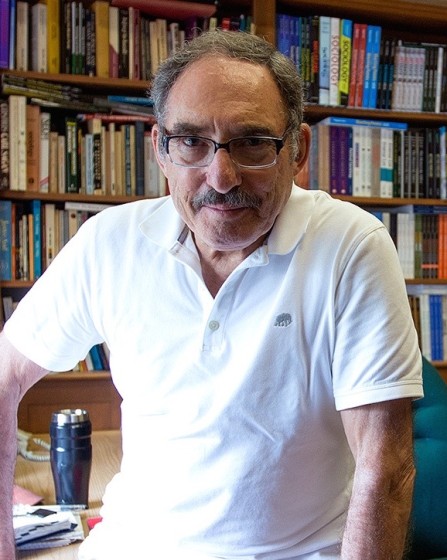
Lorne Tepperman, a long-time resident of Toronto and distinguished figure in academia, ventures into the realm of fiction with his debut work. As an Emeritus Professor of Sociology at the University of Toronto, Tepperman has authored, co-authored, edited, and co-edited 88 academic books, delving into topics ranging from social inequality to deviance and crime.
1: Are you a plotter or a pantser?
When I started writing novels, I was a nearly-complete pantser. Then two things happened. First, my nephew Joe introduced me to the plotter-pantser distinction, and I realized the alternatives. Second, I discovered a plot kind of meandered when I hadn’t planned it thoroughly enough. So, I guess I’m a mix now – say, 30 percent planner, 70 percent pantser. But I still love putting my brain on auto-pilot and seeing where it takes me.
2. What inspires you to write?
I’ve always enjoyed writing as a creative act, though I spent the first fifty years of my adult life writing academic non-fiction. Though, surprisingly, even academic non-fiction has a creative element. Especially if you care whether anyone understands what you’re saying. Or whether they want to continue reading what you’ve written. So, there has always been that creative aspect in my writing.
Besides that, there’s the social aspect. All of my novels contain a social message – something about the problems we face as humans. In connection with that, they are all (so far) part of a series about an academic protagonist in an imaginary university – so, they’re all a commentary on the idiocies of academic life in an age of commercialism.
More than anything, perhaps, there’s a political aspect to my writing. I’m trying to cope with – make sense of – the horrors of everyday life in a certain President’s USA. So, many of my books contain characters loosely modelled on American-style moguls. I make sure they get their comeuppance in my books, if nowhere else.
3. What part of the writing process do you enjoy the most? (i.e., first draft, outlining, editing)?
I haven’t mentioned writing craft yet, yet increasingly, I take delight from honing my craft. Finding better ways to express what I want to say, describing my characters, inserting little jokes and jibes like landmines. The more I write, the more I realize how hard it is to write well – interestingly, clearly, evocatively. I’m still miles from where I want to be, though.
As part of this, I love editing – reviewing and revising and improving what I’ve already written. I don’t find it hard to fill a blank page with words, but I know that revising is 90 percent of a writer’s job. I continue to marvel at the way something I wrote – something I thought I’d perfected -- seems ugly and drastically in need of editing, rewriting, rewording just a week or a month later.
I don’t consider myself a natural story-teller. So one thing I’m trying to improve is my wordplay. By that, I don’t mean eloquence so much as variety and surprise.
4. Has a real person ever inspired a character in your stories?
Yes, a certain US President – let’s call him Little Boy -- and his henchmen have inspired some of the characters in my stories. Usually, I have Little Boy (or a clone) in the back of my mind when trying to craft a blowhard, a braggart, a grifter, a windbag, a gangster, or a liar. Though, of course, none of my characters has all these characteristics. No writer could invent a Little Boy – only experience him. Though, if only I were a better, more experienced writer, I might find the words to replicate him more fully.
5. Has a real person ever inspired you to kill them (in your book)?
I have known people with some of the same qualities as Little Boy. Arrogance, greed, self-absorption, self-righteous indignation over perceived slights, endless need for praise and acquisition, and so forth. So, I have put some of these people in my novels. If you look for them, you’ll find them. And they do tend to get themselves killed. In fact, the protagonist in my Rachel Tile Series of novels (currently four novels completed) is fascinated with rage as a political phenomenon. Rachel is also fascinated with revenge as a human motive.
Now don’t get me wrong – I like Rachel, even love her. I understand why she’s so fascinated with the role of rage and revenge in everyday life. Especially, political life. But Rachel can also be adorable, loving, and loveable, when she wants to be. I think she’s an admirable person. I would never want to kill off Rachel.
6. On average, how long do you write in a day?
Increasingly, my energy is a scarce resource – like water in the southwest US. So I cannot write for an entire day, as some people claim to do. (Or maybe that’s an idle claim on their part). I write every day of the year for three or four hours, tops. Usually, I intersperse the writing with other activities – reading, cooking, eating, doing chores, going to the gym, occasionally seeing friends, watching TV in the evening. A few hours of writing in the morning, a few hours in the afternoon. That seems to work for me.
7. Are you proud of the first novel that you wrote? And did you let other people read it?
I am cautiously proud of my first novel, Deadly Donation. Yes, other people have read it. In fact, the book is published, so anyone can read it. I haven’t read it in a few years, so I’m not sure I’m proud of it, though. I would probably change lots of things if I were writing a similar plot today. The result might be better.
That said, I am proud to have started writing novels. Proud to have launched my lead character, Rachel Tile, and her obsession with rage. Proud to have given fictional form to my concerns about social and economic injustice. The point is, I have made a start, knowing I could only get better. I hope I have – gotten better, that is.
8. If you could choose only one, would you rather be a wealthy writer or a famous one?
This question is surprisingly easy to answer, since I am certain I will never be either wealthy or famous. For that reason, I can indulge my fantasy to the full. I’ve always had enough money and enough fame, but if I had to increase one of the two, it would be fame. And I do mean fame, not notoriety. I wouldn’t like to be famous as the worst writer in Canada (let alone, the worst in the world). Ideally, in this fantasy world I am concocting, people I respect would praise my work. They’d come up to me and say “Lorne, I loved your new novel. Are you writing another one? I will surely read it.”
The thing about humble goals, unlike wealth and fame, is that they are humanly attainable. Not always easy to attain, but feasible. And feasibility is one of the things that makes human beings happy.
9. What is your goal as a writer?
My primary goal as a writer is to entertain myself, improve myself, and educate myself. My secondary goal is to entertain others, improve others, and educate others. If you have read my previous answer(s), you will understand why these are my goals.
If I were much younger – if I had many more decades of writing ahead of me – I would offer more grandiose answers. Or merely, more ambitious answers. I miss the grandiosity, the vastness, the impetuosity of youth. So much energy, and (sometimes) such good outcomes when you are young. As a person of twenty-five or thirty, I would have said my goal was to transform writing. Perhaps even, transform society. Of course, I would have done neither. But it is exciting to have such plans.
Today, my goal is to continue exploring Rachel Tile. To better understand her rage. To witness the costs and benefits of that rage, but also the pleasure Rachel takes from her little family. Maybe I have learned something from living, as well as writing.
10. Other than writing, what is your passion?
Since the age of five, I have played the piano. I love music, especially classical music and jazz. At one time, I even thought of becoming a composer. I have worked as a semi-professional musician throughout much of my life. But, repeatedly, I have subordinated my passion for music. First, subordinated it to academic sociology – my source of income for fifty years. Second, since retirement, I have subordinated it to novel-writing. Occasionally, I have regretted these choices, but mostly not.